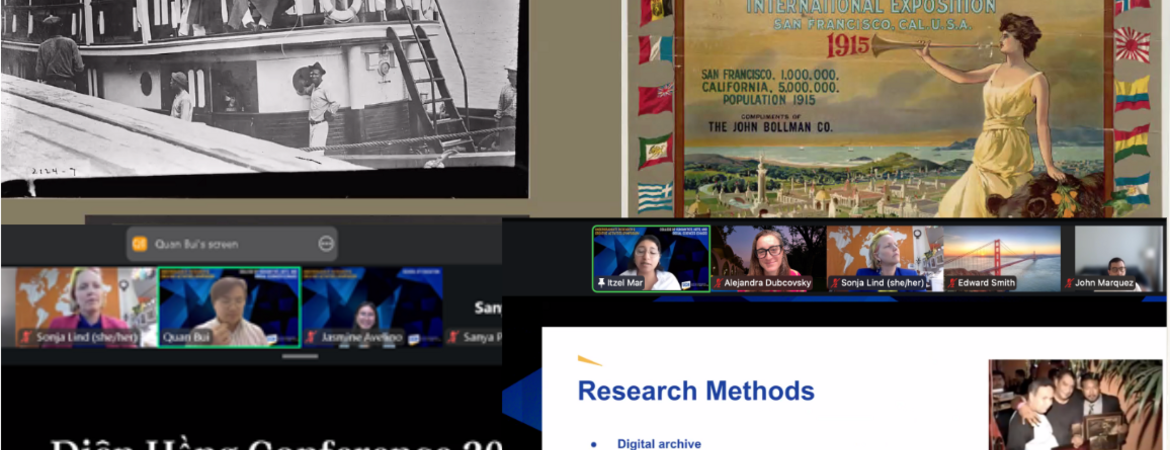
UCR history students continue to pursue ambitious and innovative research, investigating everything from tourism and colonialism in Panama to nuclear energy diplomacy in Chile, from ancient Roman political dynamics to the digital histories of video games and film. These compelling investigations represent just some of the work History students presented at the 2026 Undergraduate Research, Scholarship, and Creative Activity Symposium. The symposium, held April 20-24, 2026, provides an opportunity for undergraduate students from all disciplines to share their research and creative activities with the UCR community.
Oral Presentations: Interrogating Power, Colonialism, and Heritage
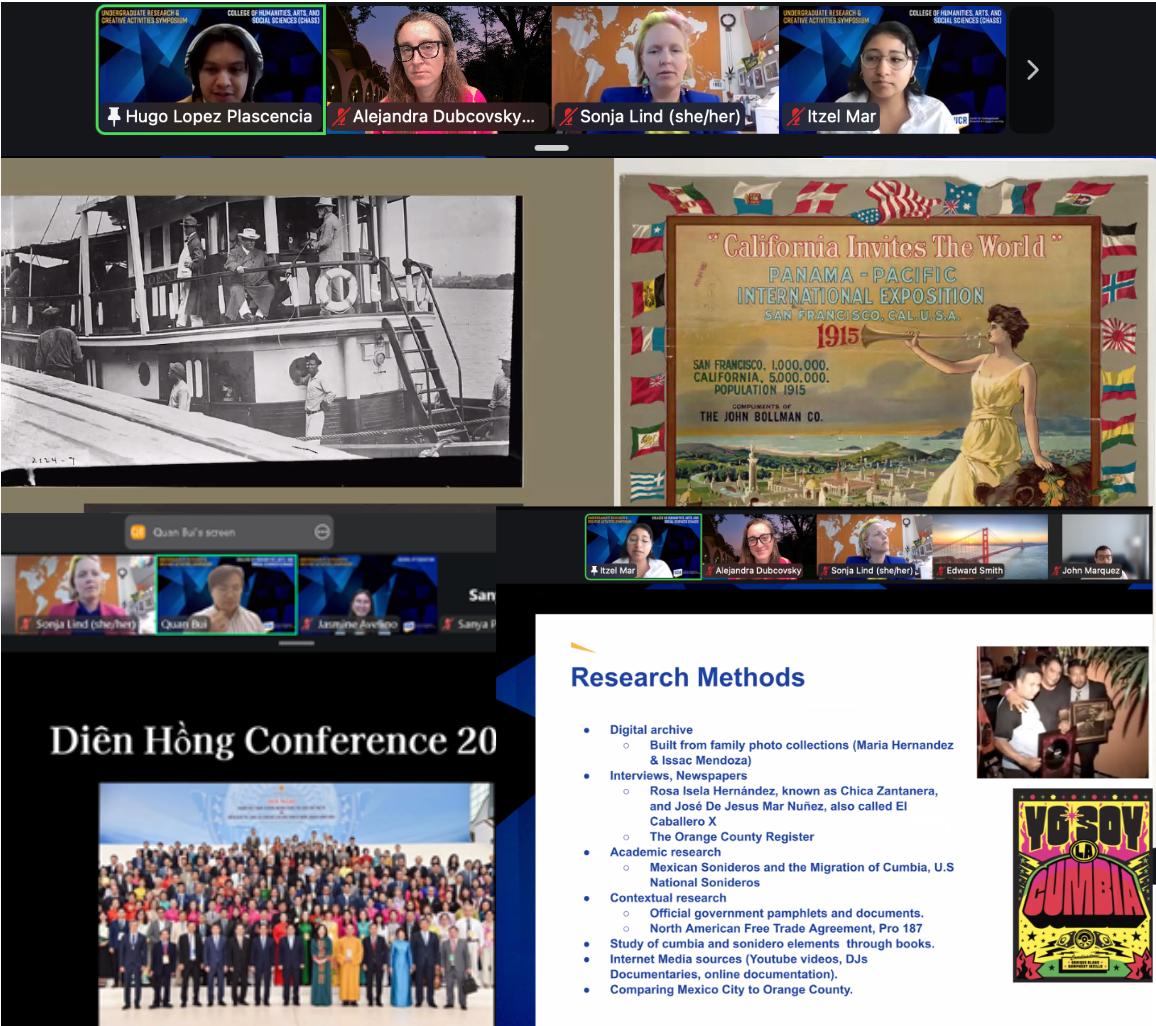
Students presenting their research through oral presentations tackled ambitious historical questions that challenge conventional narratives and reveal hidden connections across time and space. Hugo Lopez Plasencia, working with Professor John Marquez, examined “Consuming Colonialism: Tourism in Panama during the Early 20th Century,” revealing how tourism became a vehicle for imperial extraction and cultural transformation in the Panama Canal Zone. Itzel Mar, mentored by Professor Jorge Leal, explored “Cultura Sonidera: The Sounds and Dances of Mexico City in Orange County, California,” tracing how migrant communities preserved and transformed urban cultural practices.
Quan Bui, under the guidance of Professor David Biggs, investigated “Rewriting Vietnam’s Political Heritage in the Early Twentieth Century,” examining how Vietnamese intellectuals and political figures negotiated national identity during a period of colonial transition. Driti Kumar and Kalom McKeand, both working with Professor Michele Salzman, presented respectively on “Visibility and Suspicion: Livia, Agrippina, and Dynastic Legitimacy in the Julio-Claudian Principate,” centering women’s political agency in imperial Roman politics, and on “Tacitus and Pliny versus Velleius Paterculus: Tiberius a Villain of Similarity,” on their diverging views of imperial authority. Isabella Day, mentored by Professor Denver Graninger, offered “Mythic Paradigms and Female Agency in Greek Tragedy,” exploring how dramatic narratives shaped and reflected understandings of female power in antiquity.
Additional presentations featured powerful investigations into political strategy, cultural resilience, and the uses of history. Jude Manansala, working with Professor Michele Salzman, presented “United in Diversity: Italic Perspectives in the Social War,” examining how non-Roman Italian communities navigated conflict and coalition-building during Rome’s civil upheaval. Mya Wilson, guided by Professor Alexander Haskell, explored “Same Means, Different Ends: Motolinía and Alva Ixtlilxóchitl's Strategic Use of Nezahualcoyotl,” analyzing how sixteenth-century Nahua and Spanish colonial writers deployed the legacy of the Aztec king for competing political purposes.
Posters: From Nuclear Diplomacy to Digital Archives
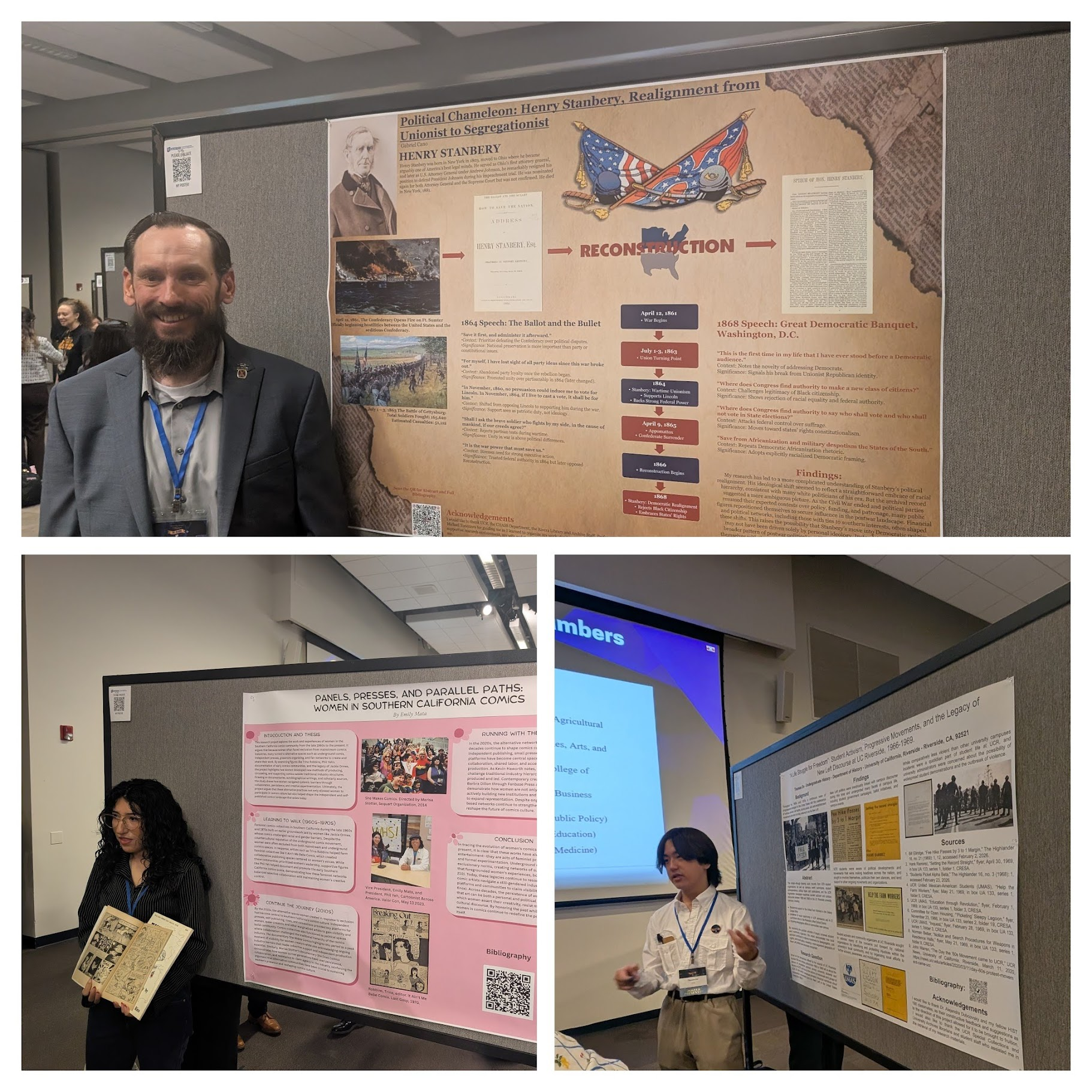
Nine history students presented their research through poster sessions, showcasing diverse approaches to historical inquiry. Several posters emerged from Professor Alejandra Dubcovsky’s courses, reflecting on media, politics, and the power of historical methodologies. Emily Mata investigated “Panels, Presses, and Parallel Paths: Women in Southern California Comics,” examining how female creators shaped the regional comic book industry. Thomas Du delivered a careful analysis of “A Life Struggle for Freedom: Student Activism, Progressive Movements, and the Legacy of New Left Discourse at UC Riverside, 1966-1969,” examining the university’s own history of student activism. Gabriel Gano presented a fascinating analysis of post-Civil War political discourse, “Political Chameleon: Henry Stanbery Realignment from Unionist to Segregationist,” exploring the hardening of a segregationist system that would shape American law for generations to come.
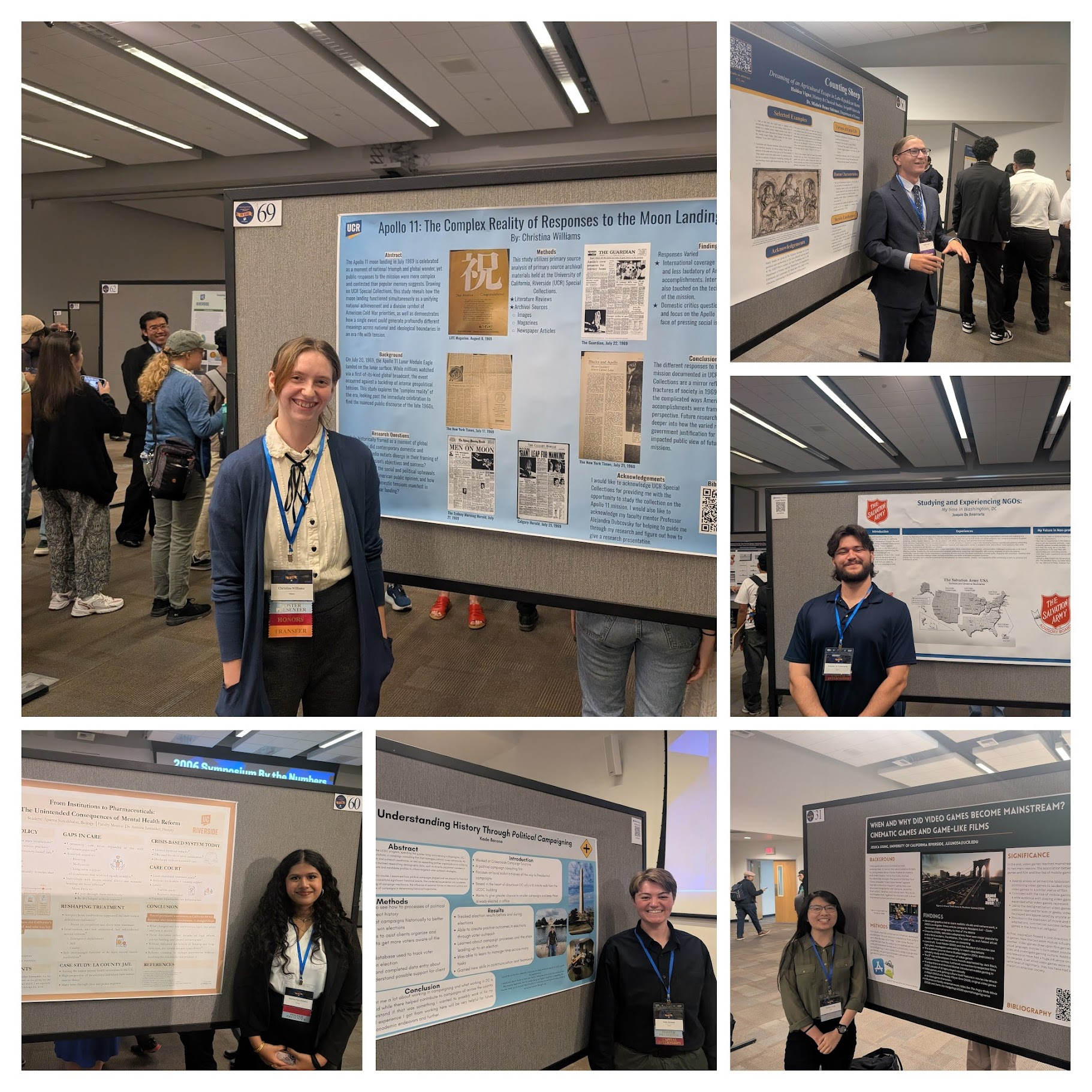
Two students brought their UCDC experiences to the symposium, Joaquin De Amorrortu presented “An Undergraduate Experience in NGOs, based out of DC,” reflecting on the intersection of historical research and contemporary policy work, and Kade Barone explored “Understanding History Through Political Campaigning,” analyzing how historical narratives are deployed in electoral politics.
Additional posters demonstrated the field’s expanding methodological horizons. Camilo Miller-Vergara, working with Professor David Biggs, examined “Global Knowledge Transfers, International Cooperation, and the Chilean Nuclear Energy Program, 1960s-1980s,” revealing how Cold War geopolitics shaped Latin American scientific and industrial development. Holden Vigna, mentored by Professor Michele Salzman, presented “Counting Sheep: Dreaming of an Agricultural Escape in Late-Republican Rome,” using literary evidence to illuminate Roman social anxieties and aspirations. Aparna Sureshbabu, working with Professor Antoine Lentacker, investigated “From Institutions to Pharmaceuticals: The Unintended Consequences of Mental Health Reform,” tracing the historical roots of contemporary debates about involuntary psychiatric treatment in California.
The poster sessions also featured innovative approaches to media history and contemporary culture. Under the mentorship of Professor Dubcovsky, Christina Williams explored “The Complex Reality of Responses to the Moon Landing,” examining how different communities experienced and interpreted space exploration, and Jessica Leung asked: “When and Why Did Video Games Become Mainstream? Cinematic Games and Game-Like Films,” investigating how gaming and cinema have converged as historical and cultural forces.
Whether through oral presentations or posters, these undergrads exemplify what history can be: curious, bold, and revelatory. They excavated forgotten voices, challenged established narratives, and connected past and present in inventive ways— working with everything from ancient texts to video games. Their work is relevant, innovative, and genuinely exciting!